Understanding Bridge Cranes: Definition and Functionality
Bridge cranes, also known as overhead cranes, have become integral to industrial operations where material handling efficiency is paramount. These cranes provide a robust and versatile lifting solution, allowing for the transportation of heavy loads across various applications. When exploring options, bridge cranes offer comprehensive insights into design, functionality, and safety features relevant to modern industrial needs.
What is a Bridge Crane?
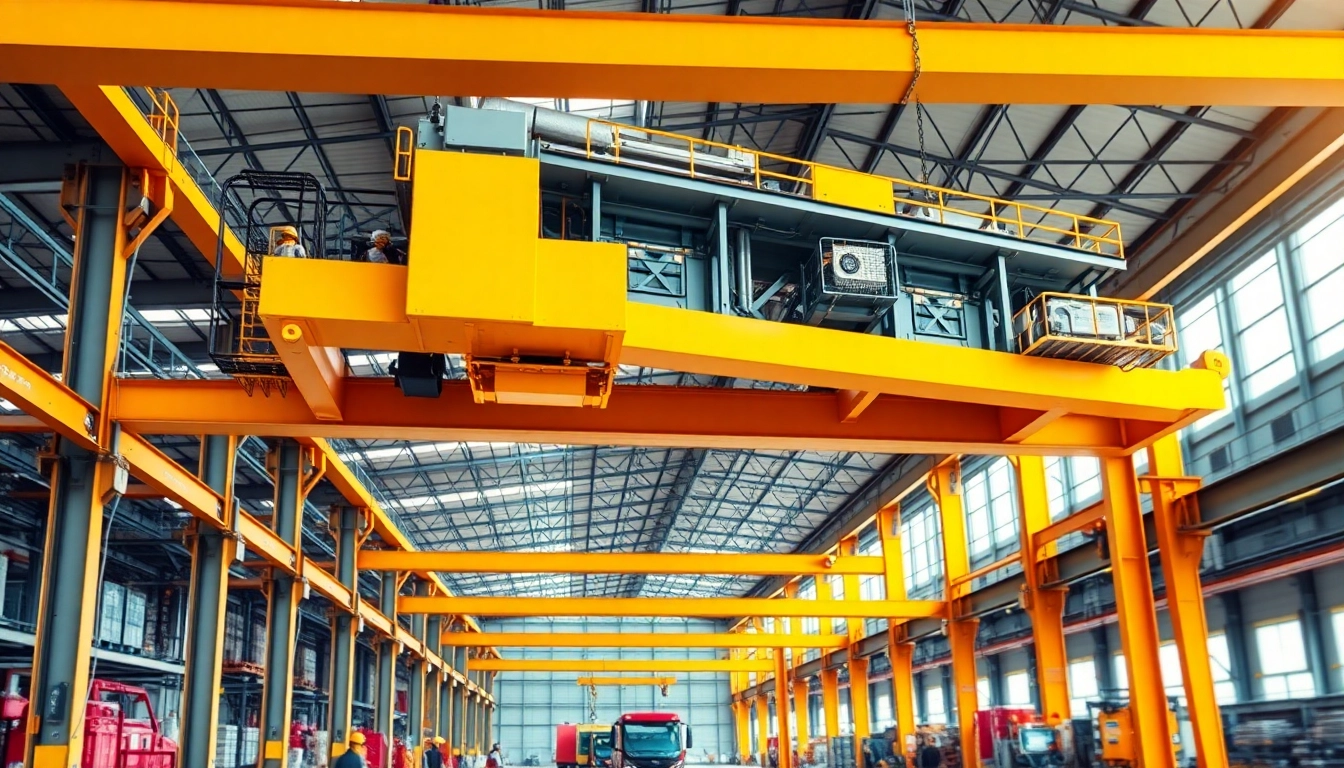
A bridge crane is a type of overhead crane that consists of a horizontal beam (the bridge) that moves along elevated tracks on either side of a workspace. This design enables it to travel back and forth, facilitating precise movements across a wide area. The crane is capable of lifting enormous weights, making it suitable for a variety of industrial settings, including manufacturing, warehousing, and construction sites.
Key Components of Bridge Cranes
- Bridge Beam: The primary horizontal structure that supports the load.
- Runway: The tracks along which the bridge travels, typically supported by building columns or freestanding structures.
- Hoist: The mechanism attached to the bridge that lifts and lowers the load.
- Controls: Systems that allow the operator to maneuver the crane safely and effectively.
How Bridge Cranes Work in Industrial Settings
Bridge cranes operate on a simple principle of lifting and moving heavy items across a workspace. The operator utilizes controls to raise or lower the hoist, which is connected to the load. By moving the bridge along the runway, the operator can transport materials from one point to another without needing manual labor or additional machinery, enhancing operational efficiency and safety.
Types of Bridge Cranes and Their Applications
Differences Between Bridge Crane and Gantry Crane
While both bridge cranes and gantry cranes serve similar purposes—lifting and moving materials—their designs differ significantly. A bridge crane typically features a fixed overhead support structure, while a gantry crane has its beams supported by freestanding legs, giving it mobility across the ground level. This distinction influences their usage; bridge cranes are often used for indoor operations in factories, whereas gantry cranes are more suited for outdoor environments and heavier lifting.
Common Use Cases for Bridge Cranes
Bridge cranes are versatile and can be adapted for various applications. Common uses include:
- Manufacturing: Moving heavy machinery and parts during assembly.
- Warehouse Management: Efficiently transferring pallets of goods.
- Construction: Lifting structural components into place.
Choosing the Right Type of Bridge Crane for Your Needs
When selecting a bridge crane, consider factors such as load capacity, span width, and the specific layout of your workspace. It’s essential to prioritize not only the specifications but also the safety features inherent in the crane's design. Engaging with a reputable supplier can help ensure that the selected crane aligns with industry standards and meets operational requirements.
Installation and Maintenance of Bridge Cranes
Site Preparation and Crane Installation Steps
Proper installation of a bridge crane is crucial for safety and functionality. Key steps include:
- Evaluate the site: Ensure the area can support the crane’s weight and operational movements.
- Install runway beams: Secure the tracks to the building structure or freestanding support systems.
- Mount the bridge: Position the bridge beam onto the tracks accurately.
- Install the hoist and controls: Ensure all components are integrated and operational.
Routine Maintenance Practices for Longevity
Regular maintenance extends the life of a bridge crane. Key practices include:
- Inspecting the hoist and lifting components for wear and tear.
- Lubricating moving parts to prevent friction and corrosion.
- Calibrating the controls to ensure precision in operation.
Safety Protocols During Crane Operation
Ensuring a safe working environment includes adhering to safety protocols such as:
- Conducting regular safety drills and operator training sessions.
- Implementing load limits and weight distribution checks.
- Using proper personal protective equipment (PPE) during crane operations.
Performance Metrics: Measuring Efficiency and Safety
Key Performance Indicators for Bridge Crane Operations
Performance metrics help assess a bridge crane's efficiency, including:
- Load handling times: Measure the duration taken to lift and transport loads.
- Downtime incidences: Track maintenance times and unexpected outages.
- Operator efficiency: Evaluate the effectiveness of operators in utilizing the crane.
Understanding Load Ratings and Safety Margins
Load ratings indicate the maximum weight a crane can safely handle. It's crucial to operate within these limits to prevent accidents and mechanical failures. Safety margins are typically built into the design, providing additional capacity above the rated load.
Benchmarking Against Industry Standards
To ensure that your bridge crane operations meet industry standards, it's essential to benchmark performance against established guidelines. Regulatory bodies such as OSHA and ASME provide valuable resources and standards for safety and efficiency in crane operations.
Future Trends in Bridge Crane Technology
Advancements in Bridge Crane Design and Functionality
The future of bridge crane technology is promising, with advancements aimed at enhancing efficiency and safety. Innovations in materials science are leading to lighter and stronger components, while smart technology integration allows for real-time monitoring and predictive maintenance capabilities.
Impact of Automation on Bridge Crane Operations
Automation is transforming bridge crane operations, with the introduction of automated controls and autonomous systems. This shift not only increases operational efficiency but also reduces the risk of human error, enhancing workplace safety.
Predictions for the Bridge Crane Market by 2025
Market predictions indicate significant growth in the bridge crane sector, driven by increased demand in manufacturing and logistics. The rise of e-commerce and global supply chains will likely contribute to this trend, emphasizing the need for efficient material handling solutions in diverse industries.