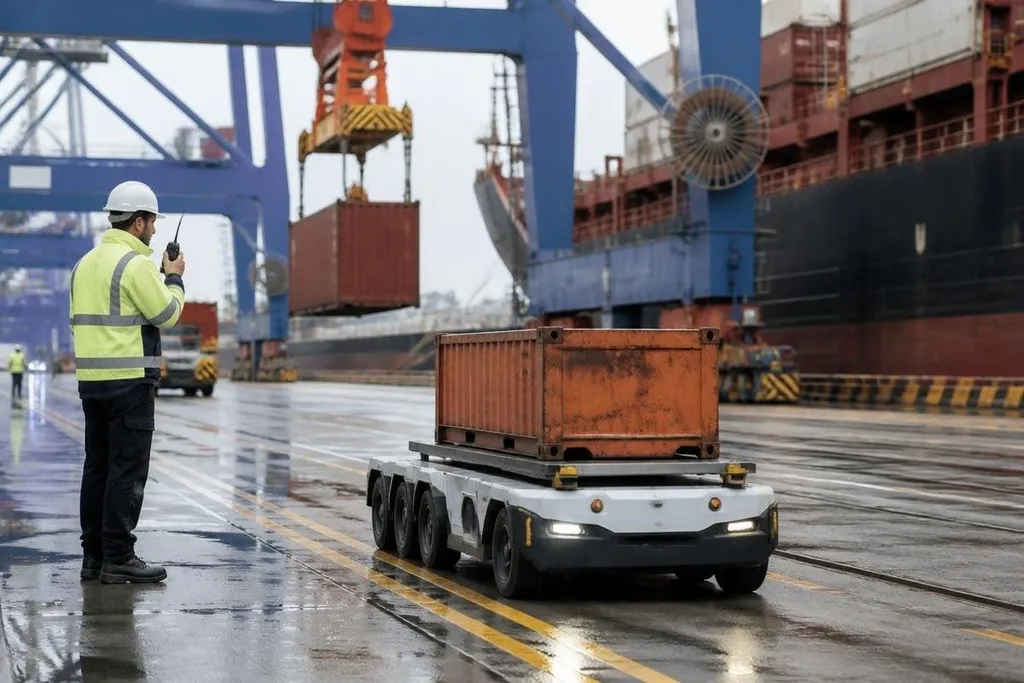
A port robot has to work around moving cranes, heavy loads, salt water, poor visibility, and people sharing the same space. The useful question is not which machine looks most advanced, but which change makes cargo work safer, more predictable, or easier to run.
Quick read
- Watch how robots handle mixed traffic, changing weather, and blocked paths.
- Treat remote control as a backup, not proof of full autonomy.
- Ask for task results, safety records, service plans, and energy use.
The port problem robots must solve
Ports are difficult places for automation because the work keeps changing. A vehicle may need to move around trucks, cranes, containers, and workers while its route changes during the same shift.
That makes perception important. Cameras, LiDAR, radar, and other sensors help a robot locate objects and track movement. The useful measure is how well the system works when visibility drops, a path is blocked, or another vehicle behaves differently from the plan.
The robot also needs a clear response when its sensors disagree. It should slow down, stop, or ask for remote help rather than continue with a guess. A smooth demo on an empty lane says little about this part of the job.
Five areas worth watching
The first is mixed-traffic autonomy. The vehicle must share space with machines that may follow fixed routes and people who may not. Look for evidence from live operations, with clear figures for stops, remote interventions, and completed moves.
The second is container handling. A system that carries an empty pallet faces a different task from one that works near suspended containers or connects with ship-to-shore equipment. Watch the handoff between machines, since delays often appear at those boundaries.
The third is positioning without a perfect signal. Steel containers can block satellite signals, while dust, rain, and darkness can reduce camera performance. A serious system needs more than one way to estimate its position and a safe response when that estimate becomes uncertain.
The fourth is fleet control. One robot can follow a route by itself.
A working port may need many machines to share roads, charging points, loading areas, and service staff. The useful proof is a record of completed jobs and delays, not a high count of robots in a press image.
The fifth is maintenance. Salt, water, vibration, and heavy braking affect sensors, wheels, batteries, and connectors. A port operator should ask how parts are checked, how faults are found, and how long a repair removes a robot from work.
A port robot’s progress needs more than a clean demo. A port manager checking a new system can compare its operator, task, test date, and measured result in reports from Robot24. The next test is whether that result holds up during port work.
What counts as real progress
A port robot earns attention when it handles the same task across changing conditions. That means repeated work, clear operating limits, and records that show what happened when the system stopped or needed help.
Remote operation deserves close attention. It can help a human manage an unusual case, but the cost depends on how often help is needed and how many robots one operator can manage safely. A claim of autonomy should state the share of work completed without intervention.
Energy use matters too. Charging time, battery swaps, and power demand affect how many hours a robot can work. A machine that saves labor but creates long charging stops may move the delay rather than remove it.
I'd watch safety recovery and maintenance records before watching a polished driving demo. Those records show whether the robot can keep working when the port stops behaving like a test site.
A practical check before you buy
Use these points when comparing a port robot or reviewing a pilot:
- Name the task: Define the exact move, load, route, and handoff the robot must complete.
- Set the conditions: Include rain, darkness, blocked lanes, mixed traffic, and weak positioning signals where they apply.
- Count human help: Record every remote takeover, stop, restart, and manual recovery.
- Price the downtime: Include charging, inspections, spare parts, software support, and repair labor.
- Set the exit test: Agree on the results that must hold before adding more robots.
The next port robot worth watching will be the one that publishes those limits and still performs its assigned work across a full operating cycle. Until that evidence appears, treat impressive movement as a starting point, not a buying reason.